
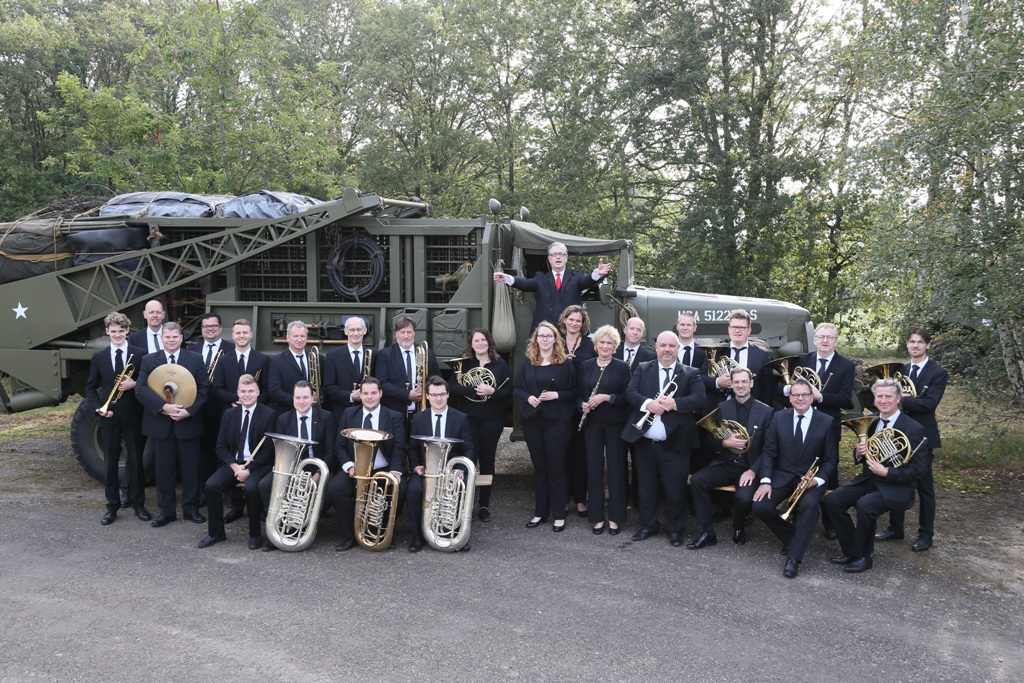
STANLEY tells it all – American brass instruments
One of the most remarkable facts about John Philip Sousa, a briljant musician by himself, was his ability to create a movement which brought the Wind Orchestra a.k.a. Wind Band to the next level. It made the USA become a serious player on a global scale, even the leading nation. Let’s have a look at what happened.
After 12 years as Music Director of the “Presidents Own” US Marine Band (1880-1892), Sousa started his own band which lasted for 39 years (1892-1931). In the early years of the Sousa Band there seems to be an accelerating effect towards developments which have become the standard even to this day. The growing popularity of the Wind Band required musical instruments and sheet music. The manufacturers became famous brandnames. We all know Conn, King and Holton, which are now owned by Conn-Selmer.
The push came from Sousa for sure. Just look at his stimulating involvement in development of this new cross over between the basstuba and the helicon which became known as the sousaphone. In 1893 J.W. Pepper (nowadays the world’s largest publisher of sheet music) built the first one, in 1898 Conn took it from there and others followed. Imagine you develop a new wind instrument which can be seen and heard at every concert by the most renowned Wind Band of the day. The marketing effect surpasses one’s imagination!
The benefits were very clear for ambitious band leaders like Sousa. Now the musical instruments were built in the USA, standardization came in reach. Although his musicians could choose between European and American brands, models and types, the USA was becoming more and more nationalistic as well. So they chose American brands. In this regard, Sousa had more influence then we may ever know.
If this isn’t enough, in time these manufacturers also started looking for previously unknown possibilities. Presence of the sousaphone actually enabled development of new marching brass instruments. The first being the mellophonium a.k.a. mellophone with bell front, which became a hit in the 50’s when Stan Kenton, the renowned Big Band leader, replaced the French Horn section of his Neophonic Jazz Orchestra for an entire section of them. Other brass instruments followed in the 60’s resulting in a totally new band type called the American Marching Band which deals with choreography as well. Check out the “Commandants Own“ US Marine Drum & Bugle Corps.
It all started with a bandmaster who had an idea: ‘I suggested to a manufacturer that we have an upright bell of large size so that the sound would diffuse over the entire orchestra like the frosting on a cake!’ (‘Marching Along’ by John Philip Sousa, 1928, page 348).
Stanley E. van Wel MM – Music Director
Posted on LinkedIn.com dated 26 June 2024